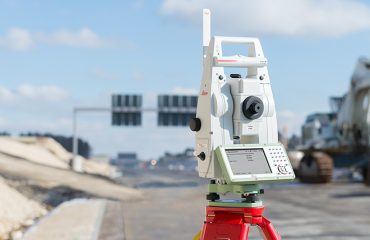
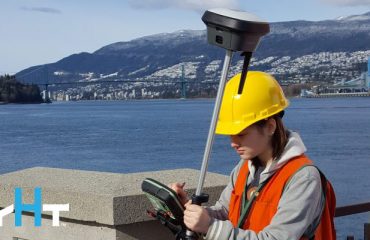
From AI-driven tracking to seamless data integration, explore the innovations setting a new standard for precision and productivity in the field.
Choosing a total station isn’t just about specs—it’s about finding the right balance of accuracy, speed, and adaptability for your projects. Today’s instruments range from reliable workhorses to next-generation systems packed with AI-driven automation and cloud connectivity. With so many options, how do you know what matters most?
This guide breaks down 10 essential capabilities—and shows you where next-gen capabilities available in the Leica TS20 AI-powered robotic total station can take your productivity to the next level. Use it as a roadmap to match technology to your workflows, budget, and growth plans.
1. Accuracy and Measurement Performance
What to look for: Angle and distance accuracy that meets your project specs, plus consistent performance across conditions.
Why it matters: Precision drives compliance and quality, resulting in fewer errors, less rework, and higher confidence in deliverables.
Level up: TS20 offers a high-frequency EDM (up to 25Hz) for dynamic targets and extended ranges.
Key question when evaluating technologies: What’s the EDM update rate, stated distance/angle accuracy, and prism/reflectorless range at speed?

2. Motorization and Speed
What to look for: Smooth, fast rotation and minimal vibration for stable setups.
Why it matters: Speed affects productivity and the reliability of automation. It also provides faster face changes and reduces downtime.
Level-up: TS20 has direct-drive BLDC motors for silent, frictionless rotation and face changes under 2 seconds.
Key Question: How fast and stable is the motor system under real-world conditions?
3. Prism Search and Aiming
What to look for: Automated routines that quickly find and aim at prisms.
Why it matters: Manual aiming slows crews and increases the likelihood of errors. Automation provides faster stakeout and data collection.
Level up: TS20 has AI-powered PowerSearch and ATR that work in mist, partial cover, and even on reflective tapes. AI-Detect automatically identifies the prism type to ensure you record measurements with the right prism type.
Key Question: Can the instrument reliably find and aim in challenging conditions?
4. Target Tracking and Relock
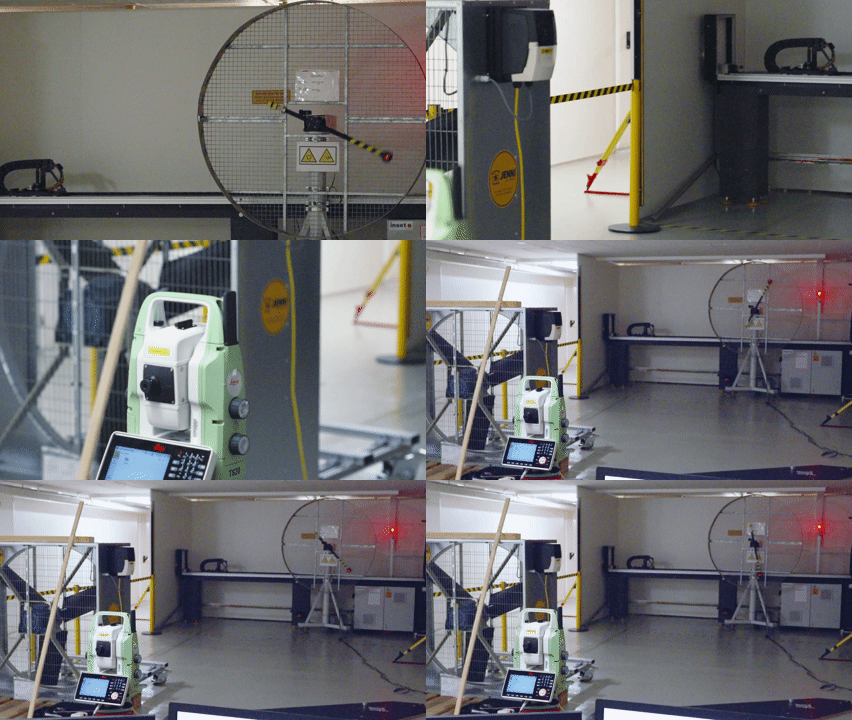
What to look for: Ability to maintain lock and reacquire quickly after interruptions.
Why it matters: Real-world sites have frequent line-of-sight breaks, so better tracking and lock means less downtime chasing targets.
Level up: TS20 offers AI-assisted DynamicLock and AI-Follow with the AP20 AutoPole for predictive relock and continuous tracking through line-of-sight breaks.
Key Question: How quickly does the instrument reacquire after losing lock?
5. Environmental Robustness
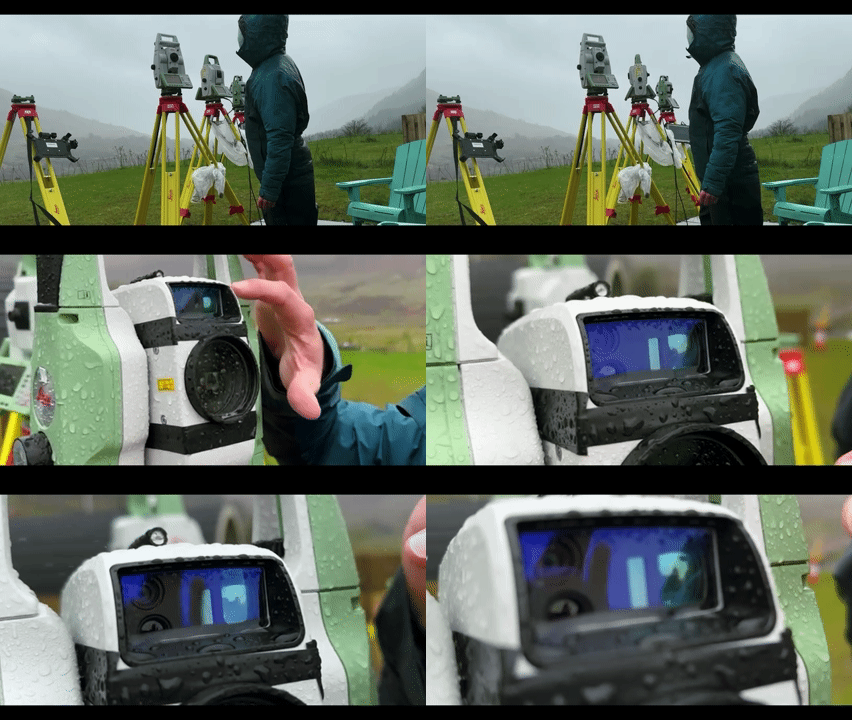
What to look for: IP rating and proven performance in dust, rain, and vibration.
Why it matters: Harsh conditions can halt work and damage equipment. A high IP rating provides more uptime and lower maintenance costs.
Level up: TS20 features an IP66 rating, providing optimized automation performance even in adverse weather conditions.
Key Question: What’s the IP rating and proven performance in adverse conditions, including misty rain?
6. Imaging and Documentation
What to look for: Integrated cameras for visual context and panoramas.
Why it matters: Photos reduce disputes and add value to deliverables. Integrated imaging adds rich documentation without slowing workflows.
Level up: TS20 has a high-res camera (20 MP) with fast, tile-free panoramas and live video steering.
Key Question: Can images be captured and linked to points without downtime?
7. Workflow Integration
What to look for: Compatibility with office software and cloud services.
Why it matters: A smooth data flow prevents errors and accelerates deliverables, supporting real-time collaboration and reducing the need for handoffs.
Level up: TS20 offers built-in mobile data, WLAN, Ethernet, and cloud sync with theft deterrence.
Key Question: How easily does the instrument connect to your existing ecosystem?
8. Security and Asset Management
What to look for: Tools to protect and track high-value instruments.
Why it matters: Theft protection provides peace of mind and better recovery odds.
Level up: TS20 offers GeoCloud Protect for remote locking, movement alerts, and location history.
Key Question: Can you lock and locate the instrument remotely?

9. Error Prevention Features
What to look for: Safeguards against common mistakes like wrong prism constants and instrument height errors.
Why it matters: Field errors cost time and money. Built-in QA reduces rework.
Level up: TS20 features AutoHeight for one-button instrument height adjustment, eliminating tape and transcription errors, and AI-Detect for automatic target-type identification and alerts.
Key Question: Does the instrument actively prevent setup errors?
10. Future-Proofing and Scalability
What to look for: Upgrade paths, modular accessories, and regular software updates.
Why it matters: Technology evolves—your investment should too. Look for lower total cost of ownership and readiness for new workflows.
Level up: TS20 offers AI-driven enhancements to paired systems—like tilt compensation and automatic pole height measurements with the AP20 AutoPole—along with continuous software/firmware improvements in the Captivate field software.
Key Question: What’s the upgrade path and how often are new features released?
The right total station can transform your field efficiency, reduce costly errors, and open doors to new opportunities. By focusing on these 10 capabilities—and understanding which next-gen features deliver the biggest impact—you’ll make a decision that pays off for years to come. Whether your priority is speed, automation, hybrid workflows, or future-proof scalability, the key is to choose a solution that fits your business today and grows with you tomorrow.
Note: Features, specifications, and performance details described in this article apply to the Leica TS20 total station family as a whole. Certain capabilities—such as imaging, AI-Detect, AI-Follow, PowerSearch, and mobile data connectivity—are available only on specific TS20 variants (for example, TS20 I, TS20 P, or with the optional AP20 AutoPole or GMI01 communication module). Always confirm the configuration and compatible accessories that match your application before purchase.